Delhi FoodBank & India Education-Nutrition Transformation: Complete CSR Implementation Guide
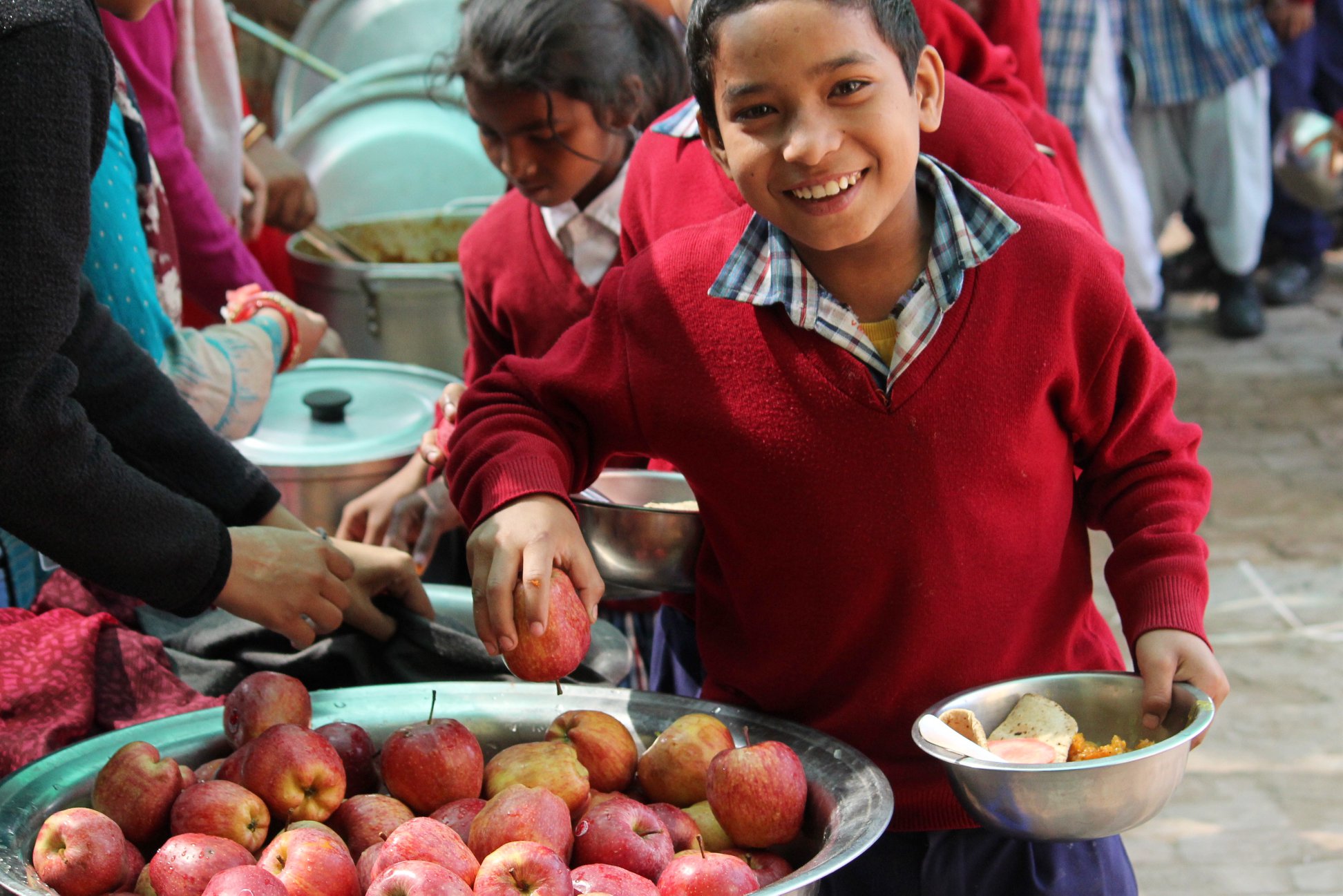
₹30,000+ Crore CSR Opportunity: Transform 24.8 crore students and combat hunger affecting 172 million Indians through strategic education and nutrition CSR investment with Responsenet.
📧 Email: [email protected] | 📞 Call: +91 9910737524 / 9810007524
Total CSR Spending FY 2022-23
Students in India's Education System
Undernourished Indians (12% population)
Children under PM POSHAN Scheme
Global Hunger Index 2025 (of 123)
CSR Funds to Education Sector
POSHAN Tracker Beneficiaries
ROI on Nutrition Investment
India's Hunger & Malnutrition Crisis: The Urgent CSR Opportunity
Despite being the world's fifth-largest economy with a GDP of approximately $4 trillion, India continues to face severe nutrition challenges. The 2025 Global Hunger Index ranks India 102nd out of 123 countries with a 'serious' hunger level. This paradox of poverty amidst plenty represents both a national challenge and a massive CSR investment opportunity.
GHI Score: 25.8 (Serious Level) | Rank: 102 of 123 countries
Components: Undernourishment 12% | Child Stunting 32.9% | Child Wasting 18.7% (Highest in World) | Child Mortality 2.8%
India's Malnutrition Indicators: NFHS Data & 2025 Status
| Indicator | NFHS-4 (2015-16) | NFHS-5 (2019-21) | 2025 Status | CSR Priority |
|---|---|---|---|---|
| Child Stunting (0-5 years) | 38.4% | 35.5% | 32.9% (37M children) | HIGH |
| Child Wasting (0-5 years) | 21.0% | 19.3% | 18.7% (21M+ children) | CRITICAL |
| Underweight Children | 35.8% | 32.1% | Improving slowly | HIGH |
| Anemia in Women (15-49) | 53.1% | 57.0% | 53.7% (203M women) | URGENT |
| Anemia in Children (6-59 mo) | 58.6% | 67.1% | Worsening trend | CRITICAL |
| Undernourished Population | 14.5% | ~13% | 12% (172M people) | HIGH |
Over 21 million Indian children have low weight for height—an urgent marker of undernourishment often caused by inadequate food quality/quantity or frequent illness. Additionally, 42.9% of Indians cannot afford a healthy diet. This creates a massive CSR opportunity for targeted nutrition interventions.
India's Double Burden: Undernutrition Meets Rising Obesity
• 37+ million children stunted • 21+ million children wasted • 203 million women anemic • 172 million undernourished • 67% children (6-59 mo) anemic
• Overweight children: 2.7M → 4.2M (2012-24) • Adult obesity: 33.6M → 71.4M (doubled) • Women overweight/obese: 24% (NFHS-5) • Men overweight/obese: 22.9% (NFHS-5) • Programs focus on under- not over-nutrition
India's Education Sector: Scale, Progress & CSR Opportunities
India operates the world's second-largest education system, serving 24.8 crore students across 14.72 lakh schools with 98 lakh teachers (UDISE+ 2023-24). The National Education Policy (NEP) 2020 aims to achieve 100% Gross Enrollment Ratio (GER) by 2030, creating massive CSR investment opportunities.
14.72 Lakh total | 69% Government | 22.5% Private
24.8 Crore total | 50% in Govt schools | 32.6% in Private
98 Lakh total | 51% in Govt schools | 38% in Private
Gross Enrollment Ratio (GER): Progress & Gaps
| Education Level | Current GER | NEP 2020 Target | CSR Opportunity |
|---|---|---|---|
| Primary | 93% ✓ | 100% by 2030 | Quality focus |
| Secondary | 77.4-78.7% | 100% by 2030 | HIGH GAP |
| Higher Secondary | 56.2-58.4% | 100% by 2030 | MASSIVE GAP |
| Higher Education (18-23) | 28.4-32.5% | 50% by 2035 | CRITICAL |
Schools with Computers: 38.5% (2019-20) → 57.2% (2023-24) → 64.7% (2024-25)
Schools with Internet: 22.3% (2019-20) → 53.9% (2023-24)
CSR Opportunity: 35%+ schools still lack computers; 46%+ lack internet—massive digital equity gap for corporate investment.
PM POSHAN (Mid-Day Meal): World's Largest School Feeding Program
The Pradhan Mantri Poshan Shakti Nirman (PM POSHAN) scheme, formerly the Mid-Day Meal Scheme, is the world's largest school feeding program, serving over 11.8 crore children in 10.3+ lakh schools daily. Launched in 1995 and rebranded in September 2021, the scheme is implemented for 2021-26 with a total outlay of ₹1,30,794.90 crore (₹54,061.73 crore Central + ₹31,733.17 crore State + ₹45,000 crore foodgrains).
Students covered (FY 2023-24: 11.63 cr)
Schools serving meals (down from 11.1L in 2020-21)
Students availing meals daily on average
| PM POSHAN Norms | Primary (Class 1-5) | Upper Primary (Class 6-8) |
|---|---|---|
| Calories | 450 calories | 700 calories |
| Protein | 12 grams | 20 grams |
| Food Grains | 100 grams | 150 grams |
| Cooking Cost/Child/Day (May 2025) | ₹6.78 | ₹10.17 |
💰 PM POSHAN Budget: FY 2025-26: ₹12,500 crore allocated | FY 2024-25: ₹12,467.39 crore (revised to ₹10,000 crore, only ₹5,421.9 crore spent by Feb 2025)
CSR Opportunity: Budget utilization gap and need for enhanced nutrition content (eggs, chicken, fortified foods) create partnership opportunities for corporates.
Mission POSHAN 2.0: India's Flagship Nutrition Program
Launched in March 2018, POSHAN Abhiyaan (National Nutrition Mission) is one of the world's largest programs for nutrition and early childhood development. In 2021, it was restructured as Mission Saksham Anganwadi & Poshan 2.0, integrating Anganwadi Services, POSHAN Abhiyaan, and Scheme for Adolescent Girls into a unified framework.
- 14.02 lakh Anganwadi Centers registered • 9.14+ crore beneficiaries on Poshan Tracker
- 72.22 lakh pregnant women registered • 4.05+ crore maternity benefits delivered
- 11.04 lakh smartphones to AWWs • 12.53 lakh growth monitoring devices
💰 Budget & Funding: FY 2025-26: ₹21,960 crore (Saksham Anganwadi & Poshan 2.0) • Ministry total: ₹26,889.69 crore • FY 2023-24: ₹21,523.13 crore • 2021-2024 releases: ₹52,444 crore • 730 districts covered incl. 112 Aspirational Districts
- Stunting reduced: 38.4% → 35.5% (11 focus states: 41% → 37%)
- Wasting reduced: 21.0% → 19.3% (11 focus states: 22% → 20%)
- Underweight reduced: 35.8% → 32.1%
- Exclusive breastfeeding: 54.1% → 64.6% (58% national)
- Counseling after child weighing: 63.2% → 76.3%
- 8.6+ lakh Anganwadi Workers trained (81% of total)
CSR Spending Trends: Education & Nutrition Lead
India's CSR spending has grown consistently, reaching ₹29,986.92 crore in FY 2022-23 (up from ₹26,579.78 crore in FY 2021-22). In FY 2023-24, listed companies' CSR spending rose 16% to ₹17,967 crore. Education and healthcare/nutrition remain the dominant sectors, receiving over 60% of total CSR funds.
| CSR Sector | FY 2022-23 Spend | % Share |
|---|---|---|
| Education, Skills, Livelihood | ₹10,085+ crore | 33-35% |
| Healthcare, Sanitation & Nutrition | ₹8,739+ crore | 25-29% |
| Environment & Sustainability | ₹2,392+ crore | ~10% |
| Rural Development | ~₹2,000 crore | ~7% |
| PM Relief Fund / PM CARES | ₹815 crore | ~3% |
FY 2017-18: ₹17,096 crore → FY 2021-22: ₹26,278 crore → FY 2022-23: ₹29,987 crore
53% growth over 5 years | 51,966 CSR projects in FY23 | 98% company compliance | PSUs contribute 17% despite being 2% of companies
Schedule VII: Eligible CSR Activities for Education & Nutrition
"Eradicating hunger, poverty and malnutrition, promoting health care including preventive health care and sanitation including contribution to the Swachh Bharat Kosh set-up by the Central Government for the promotion of sanitation and making available safe drinking water"
"Promoting education, including special education and employment enhancing vocation skills especially among children, women, elderly, and the differently abled and livelihood enhancement projects"
Frequently Asked Questions (FAQ)
Q1: What is India's current ranking in the Global Hunger Index 2025?
India ranks 102nd out of 123 countries in the 2025 Global Hunger Index with a score of 25.8, classified as 'serious' hunger level. The four GHI components for India are: undernourishment 12%, child stunting 32.9%, child wasting 18.7% (highest in the world), and child mortality 2.8%. Despite progress—undernourishment has decreased from 243 million in 2006 to 172 million in 2024—India still has the world's largest number of undernourished people, primarily due to population size.
Q2: What is PM POSHAN and how many children does it serve?
PM POSHAN (Pradhan Mantri Poshan Shakti Nirman), formerly the Mid-Day Meal Scheme, is the world's largest school feeding program. It serves 11.8 crore children studying in 10.3+ lakh government and government-aided schools across India. On average, 8.5 crore students receive hot cooked meals daily for approximately 220 school days per year. The scheme provides 450 calories and 12g protein for primary students (Classes 1-5) and 700 calories and 20g protein for upper primary students (Classes 6-8). The total 2021-26 outlay is ₹1,30,794.90 crore, with FY 2025-26 allocation of ₹12,500 crore.
Q3: What are India's key malnutrition indicators according to NFHS-5?
According to NFHS-5 (2019-21) and 2025 updates: Child stunting (low height-for-age) affects 35.5% of children under 5 (32.9% per 2025 estimates = 37 million children). Child wasting (low weight-for-height) affects 19.3% (18.7% per 2025 = 21+ million children—highest rate globally). Underweight children: 32.1%. Anemia in women (15-49): 57% (2019-21), now 53.7% (203 million women). Anemia in children (6-59 months): 67.1% (worsening trend). India also faces a 'double burden' with overweight children rising from 2.7M to 4.2M (2012-2024) and adult obesity doubling to 71.4 million.
Q4: How does education CSR qualify under Schedule VII?
Education is explicitly covered under Schedule VII Item (ii) of the Companies Act, 2013: 'Promoting education, including special education and employment enhancing vocation skills especially among children, women, elderly, and the differently abled and livelihood enhancement projects.' Education receives the largest share of CSR funds—approximately 33-35% (₹10,085+ crore in FY 2022-23). Eligible activities include: school infrastructure, digital learning, teacher training, scholarships, vocational training, and educational technology. CSR spending on education has increased 150%+ over five years.
Q5: What is POSHAN Abhiyaan and what has it achieved?
POSHAN Abhiyaan (National Nutrition Mission) was launched in March 2018 and restructured as Mission Saksham Anganwadi & Poshan 2.0 in 2021. It's one of the world's largest nutrition programs covering 730 districts including 112 Aspirational Districts. Key achievements: stunting reduced from 38.4% to 35.5%, wasting from 21.0% to 19.3%, underweight from 35.8% to 32.1%, exclusive breastfeeding increased from 54.1% to 64.6%. As of September 2025: 14.02 lakh Anganwadi Centers and 9.14+ crore beneficiaries on Poshan Tracker, 72.22 lakh pregnant women registered, 4.05+ crore maternity benefits delivered. FY 2025-26 budget: ₹21,960 crore.
Q6: What is India's education enrollment status under NEP 2020?
India's school system serves 24.8 crore students in 14.72 lakh schools with 98 lakh teachers (UDISE+ 2023-24). NEP 2020 targets 100% GER by 2030. Current GER status: Primary 93% (near universal), Secondary 77.4-78.7% (gap exists), Higher Secondary 56.2-58.4% (massive gap), Higher Education (18-23) 28.4-32.5% targeting 50% by 2035. Dropout rates: Primary 1.9%, Upper Primary 5.2%, Secondary 14.1%. Digital infrastructure has improved: schools with computers 38.5% → 64.7% (2019-2025), internet access 22.3% → 53.9%. However, 68 lakh students dropped out in 2024-25 (25 lakh elementary, 43 lakh secondary).
Q7: What is the ROI on nutrition investment?
Research shows every ₹1 invested in nutrition returns approximately ₹18 through improved productivity, reduced healthcare costs, and enhanced cognitive development. The first 1,000 days of life (conception to age 2) are critical—interventions during this window yield the highest returns. Nutrition investment impacts: cognitive development and learning outcomes, workforce productivity, healthcare cost reduction, economic growth potential. Companies investing in nutrition see enhanced CSR impact, community goodwill, and alignment with SDG 2 (Zero Hunger) and SDG 3 (Good Health).
Q8: What percentage of Indians cannot afford a healthy diet?
According to the 2025 State of Food Security and Nutrition in the World (SOFI) report, 42.9% of Indians cannot afford a healthy diet. This represents a significant portion of the 2.6 billion people globally who face this challenge. The affordability gap is driven by: rising food prices and inflation, limited access to diverse foods (fruits, vegetables, protein), income inequality especially in rural and tribal areas, and inadequate dietary diversity despite calorie sufficiency. This 'hidden hunger' (micronutrient deficiency) affects even those who have enough calories but lack essential nutrients.
Q9: How can corporates partner with Responsenet for education and nutrition CSR?
Responsenet offers comprehensive CSR implementation partnerships: (1) Program Design & Strategy—aligned with Schedule VII, SDGs, and company objectives, (2) Implementation—on-ground execution across multiple states with quality assurance, (3) Monitoring & Evaluation—real-time dashboards, outcome-based reporting, third-party verification, (4) Stakeholder Engagement—coordination with government schemes (PM POSHAN, POSHAN Abhiyaan, Samagra Shiksha), (5) Sustainability Planning—long-term impact and capacity building. Priority areas include digital learning infrastructure, community nutrition centers, teacher training, supplementary nutrition programs, and school feeding program enhancement.
Q10: What food is wasted in India despite widespread hunger?
India faces a paradox of food waste alongside hunger. According to the Food Corporation of India, approximately 40% of food grown in India is wasted due to inadequate storage, transportation, and infrastructure. This waste occurs at multiple stages: post-harvest losses due to poor storage, transportation damage, market wastage, and household waste. Meanwhile, 172 million Indians remain undernourished and 40% of food is lost before reaching consumers. CSR opportunities exist in: cold chain infrastructure, last-mile distribution, food rescue and redistribution programs, and community kitchen initiatives.
Nourish Minds. Feed Futures. Transform India.
Partner with Responsenet to deploy your CSR resources for maximum impact—from mid-day meals to digital classrooms, from Anganwadi nutrition to skill development. Every ₹1 in nutrition returns ₹18.
Partner for Education & Nutrition CSR Impact
Schedule VII Compliant | SDG Aligned | Transparent Impact Reporting. Responsenet offers end-to-end implementation—Delhi FoodBank, PM POSHAN supplementation, Anganwadi strengthening, digital learning infrastructure.
📧 Email Now: [email protected]
📞 Call Now: +91 9910737524 / 9810007524
Delhi FoodBank | Education & Nutrition CSR | Since 2007