Corporate Social Responsibility (CSR) in India: Complete Guide to Applicability, Compliance, Implementation & Latest Amendments (2025)
Need CSR Consultation? Get expert guidance on CSR strategy, compliance, and implementation from Responsenet's specialists.
📧 [email protected] | 📞 +91 9810007524 | 9910737524
India made history in 2014 by becoming the first country in the world to mandate Corporate Social Responsibility (CSR) spending through legislation. Under Section 135 of the Companies Act, 2013, qualifying companies must allocate at least 2% of their average net profits to social development activities.
Over the past decade, this framework has transformed CSR from voluntary philanthropy into a structured, strategic initiative addressing India's pressing social and environmental challenges. This comprehensive guide covers everything you need to know about CSR in India—from applicability criteria and compliance requirements to the latest 2025 amendments and implementation best practices.
India CSR at a Glance: Key Statistics (2014-2025)
| Metric | Value |
|---|---|
| Total CSR Spending (2014-2024) | ₹2.17 Lakh Crore+ |
| CSR Expenditure FY 2023-24 | ₹34,909 Crore |
| Projected Spending FY 2024-25 | ₹38,000 Crore |
| Filing CSR Returns Annually | 27,188+ Companies |
CSR spending has grown by over 247% from ₹10,065 crore in FY 2014-15 to ₹34,909 crore in FY 2023-24, demonstrating the maturation of India's mandatory CSR framework.
CSR Applicability: Which Companies Must Comply?
Under Section 135(1) of the Companies Act, 2013, CSR provisions apply to companies meeting any one of the following thresholds during the immediately preceding financial year:
Current Thresholds (As of 2024)
| Criteria | Threshold |
|---|---|
| Net Worth | ₹500 crore or more |
| Turnover | ₹1,000 crore or more |
| Net Profit | ₹5 crore or more |
Proposed New Thresholds (Companies Amendment Bill, 2025)
The Companies (Amendment) Bill, 2025, introduced in December 2025, proposes to significantly lower these thresholds, expanding CSR obligations to mid-sized and smaller companies:
| Criteria | Current | Proposed 2025 |
|---|---|---|
| Net Worth | ₹500 Cr | ₹100 Cr |
| Turnover | ₹1,000 Cr | ₹500 Cr |
| Net Profit | ₹5 Cr | ₹3 Cr |
Schedule VII: Eligible CSR Activities
CSR expenditure must be directed towards activities specified in Schedule VII of the Companies Act, 2013. These include:
- Eradicating hunger, poverty, and malnutrition; promoting healthcare including preventive healthcare and sanitation
- Promoting education, including special education and employment-enhancing vocational skills
- Promoting gender equality, empowering women, and setting up homes/hostels for women and orphans
- Ensuring environmental sustainability, ecological balance, protection of flora and fauna, animal welfare
- Protection of national heritage, art, and culture; restoration of historic buildings and sites
- Measures for the benefit of armed forces veterans, war widows, and their dependents
- Training to promote rural sports, nationally recognized sports, Paralympic sports, and Olympic sports
- Contribution to PM Relief Fund, PM CARES Fund, and other government relief funds
- Rural development projects and slum area development
- Disaster management, including relief, rehabilitation, and reconstruction activities
Sector-wise CSR Allocation (FY 2023-24)
| Sector | Allocation | % Share |
|---|---|---|
| Education & Skill Development | ₹13,209+ Cr | 44% |
| Healthcare & Sanitation | ₹8,739+ Cr | 29% |
| Environment & Sustainability | ₹2,921+ Cr | 10% |
| Rural Development | ₹2,005+ Cr | 7% |
| Women Empowerment & Senior Care | ₹1,499+ Cr | 5% |
| PM Relief Fund & Disaster Management | ₹815+ Cr | 3% |
| Sports & Heritage | ₹967+ Cr | 2% |
State-wise CSR Distribution & Regional Disparities
A significant challenge in India's CSR landscape is the geographical concentration of funds. Over 70% of CSR spending flows to just 5-6 industrialized states:
| State | CSR Received | % Share |
|---|---|---|
| Maharashtra | ₹5,375 Cr | 18% |
| Gujarat | ₹4,200 Cr | 14% |
| Karnataka | ₹3,800 Cr | 12.7% |
| Tamil Nadu | ₹3,200 Cr | 10.7% |
| Uttar Pradesh | ₹2,800 Cr | 9.3% |
| North Eastern States (Combined) | ₹150 Cr | <1% |
Latest CSR Amendments & Regulatory Updates (2024-2025)
1. Companies (CSR Policy) Amendment Rules, 2025
Effective July 14, 2025, MCA introduced significant changes to the CSR-1 registration process:
- Revised CSR-1 form with mandatory detailed disclosures
- Mandatory PAN, OTP-verified email, and Digital Signature Certificates
- Professional certification by practicing CA/CS/CMA required
- Three-year track record mandatory for non-company entities
- Stricter penalties under Sections 448 and 449 for false declarations
2. Companies (Amendment) Bill, 2025
Introduced in December 2025, this Bill proposes transformative changes:
- Lowered financial thresholds (Net Worth: ₹100 Cr, Turnover: ₹500 Cr, Profit: ₹3 Cr)
- Mandatory CSR-experienced director on CSR Committee
- Enhanced governance and accountability requirements
3. CSR-2 Filing Deadline Extension
MCA extended the CSR-2 filing deadline for FY 2023-24 from December 31, 2024 to March 31, 2025 via G.S.R. 794(E) notification.
Future CSR Trends (2025-2030)
- ESG Integration: 80% of companies now link executive compensation to ESG goals
- Digital Transformation: AI and blockchain revolutionizing impact measurement and transparency
- Climate Action: India's net-zero 2070 commitment driving green CSR initiatives
- Spending Projections: ₹45,000 Cr by 2028, ₹60,000 Cr by 2030
- Multi-stakeholder Partnerships: 87% of CSR leaders interested in collaborative engagements
Frequently Asked Questions (FAQ)
Q1: What is CSR under Indian law?
Corporate Social Responsibility (CSR) under Indian law refers to the mandatory obligation for qualifying companies to spend at least 2% of their average net profits (of the preceding three financial years) on social development activities specified in Schedule VII of the Companies Act, 2013. India became the first country to mandate CSR spending through legislation in 2014.
Q2: Which companies are required to comply with CSR provisions?
Companies meeting any one of these criteria in the preceding financial year must comply: Net Worth of ₹500 crore or more, OR Turnover of ₹1,000 crore or more, OR Net Profit of ₹5 crore or more. This applies to all companies including private, public, foreign companies with branch/project offices in India, and holding/subsidiary companies.
Q3: How is CSR spending calculated?
Companies must spend at least 2% of their average net profits calculated over the three immediately preceding financial years. For newly incorporated companies, CSR obligation is based on average net profits from preceding financial years since incorporation. Net profit is calculated as per Section 198 of the Companies Act.
Q4: What is the CSR Committee and who must form one?
Every company meeting CSR thresholds must constitute a CSR Committee of the Board consisting of three or more directors, including at least one independent director. The Committee formulates CSR policy, recommends CSR activities and expenditure, monitors implementation, and prepares CSR reports. Companies not required to appoint independent directors can have a CSR Committee with two or more directors.
Q5: What happens if a company doesn't spend the required CSR amount?
If CSR amount remains unspent, the company must transfer it to an Unspent CSR Account within 30 days of the financial year-end and spend it within 3 years on ongoing projects. For amounts unrelated to ongoing projects, companies must transfer to a Schedule VII fund (like PM CARES, PM Relief Fund) within 6 months. Non-compliance attracts penalties: company may be fined up to twice the unspent amount (minimum ₹50,000), and officers in default may face imprisonment up to 3 years or fine up to ₹25 lakh.
Q6: Can companies implement CSR projects directly or must they use NGOs?
Companies have three options: (1) Implement CSR projects directly through their own teams, (2) Partner with registered implementing agencies (Section 8 companies, registered trusts/societies with 80G/12A registration) registered on the CSR Portal with CSR-1, (3) Collaborate with government agencies or entities established under Act of Parliament/State Legislature. Most companies choose to partner with experienced NGOs for better ground-level implementation and expertise.
Q7: What is CSR-1 and CSR-2 filing?
CSR-1 is a registration form that implementing agencies (NGOs, trusts, Section 8 companies) must file to register on the National CSR Portal before undertaking CSR activities. CSR-2 is an annual disclosure form that companies file to report their CSR activities, expenditure, and implementing agency details for each financial year. Both are mandatory MCA filings.
Q8: Is impact assessment mandatory for CSR projects?
Impact assessment is mandatory for companies with average CSR obligation of ₹10 crore or more over the preceding three years. Assessment must be conducted by independent third-party agencies for projects with outlay of ₹1 crore or more completed at least one year before. Assessment expenditure is capped at 2% of total CSR expenditure or ₹50 lakh (whichever is higher).
Q9: Can CSR funds be used for activities outside India?
No. CSR activities must be undertaken in India only. However, companies can contribute to the PM CARES Fund, which may deploy resources for disaster relief both domestically and internationally. The 'local area' preference encourages companies to prioritize areas around their operations, though this is not mandatory.
Q10: What are the reporting requirements for CSR?
Companies must include a CSR Report in the prescribed format as part of their Board's Report. This includes details of CSR policy, composition of CSR Committee, average net profit, prescribed CSR expenditure, actual expenditure, reasons for unspent amounts (if any), details of implementing agencies, and impact assessment reports (where applicable). Additionally, companies must file Form CSR-2 annually on the MCA portal.
Q11: Can administrative expenses be included in CSR expenditure?
Yes, but with limits. Administrative overheads related to CSR activities cannot exceed 5% of total CSR expenditure in a financial year. This includes salaries of CSR personnel, travel expenses, and other administrative costs directly related to CSR implementation and monitoring.
Q12: How do the 2025 amendments affect existing companies?
The proposed Companies (Amendment) Bill, 2025 (pending Parliamentary approval) would bring many more mid-sized companies under CSR obligations due to lowered thresholds. Companies currently below thresholds should assess if they would qualify under proposed limits (Net Worth ₹100 Cr, Turnover ₹500 Cr, Profit ₹3 Cr) and begin preparing CSR frameworks. The Bill also mandates CSR-experienced directors on Committees, requiring governance restructuring.
Q13: What is the role of a CSR implementation agency?
CSR implementation agencies (like Responsenet) provide end-to-end services including: CSR policy formulation and advisory, need/baseline assessments, project conceptualization, field-level implementation, monitoring and evaluation, CSR reporting and compliance filing, social audit and impact assessment, and NGO partner identification and due diligence. Professional agencies ensure projects are compliant, impactful, and aligned with both company goals and community needs.
Q14: Can CSR funds be spent on employee welfare activities?
No. CSR expenditure cannot be spent on activities benefiting only company employees and their families. CSR must benefit communities at large. However, skill development or livelihood enhancement programs that are open to the public (not exclusively for employees) can qualify as CSR.
Q15: How can companies ensure their CSR spending creates maximum impact?
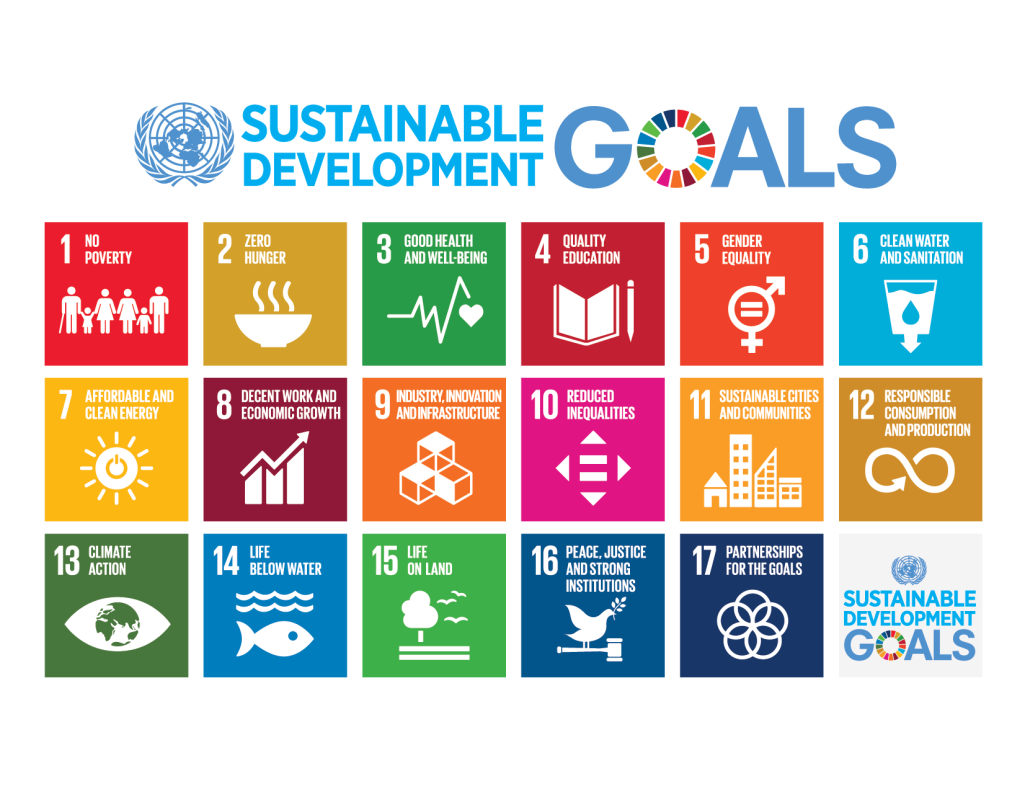
Companies should: (1) Conduct thorough need assessments before project selection, (2) Align CSR with UN SDGs and national development priorities, (3) Partner with experienced implementation agencies, (4) Implement robust monitoring and evaluation systems, (5) Conduct regular impact assessments, (6) Focus on underserved regions and aspirational districts, (7) Adopt technology for transparency and real-time tracking, and (8) Engage in multi-year projects for sustainable outcomes rather than one-time interventions.
Responsenet: Your Trusted CSR Implementation Partner
With over 17 years of experience and partnerships with 580+ companies including PSUs and private sector entities, Responsenet provides comprehensive CSR services across India:
- CSR Policy Formulation & Advisory
- Need/Baseline Assessment
- Project Conceptualization & Design
- Field-level Project Implementation
- Monitoring, Evaluation & CSR Reporting
- Social Audit & Impact Assessment
We operate across 23+ states including Jammu & Kashmir, Himachal, Uttarakhand, Punjab, Haryana, Rajasthan, Delhi, UP, MP, Jharkhand, Gujarat, Bihar, Maharashtra, Telangana, Odisha, Karnataka, Kerala, Tamil Nadu, West Bengal, Andhra Pradesh, Assam, Manipur, and Sikkim.
Partner with Responsenet for Impactful CSR
At Responsenet, we believe the right innovations and right partnerships have the ability to create lasting impact for radical yet sustainable transformations.
📧 Email Now: [email protected]
📞 Call Now: +91 9810007524 | 9910737524
✉️ General Inquiries: [email protected]